
 DE
 EN
Monitor compactors remotely, before the customer calls.
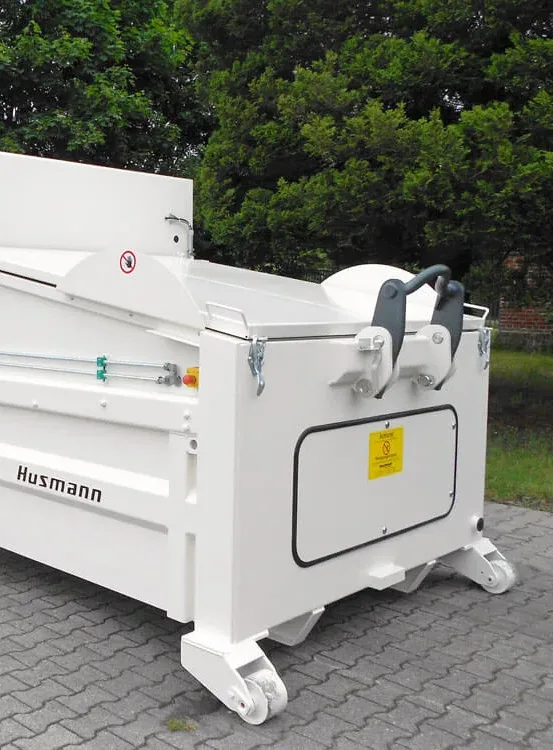
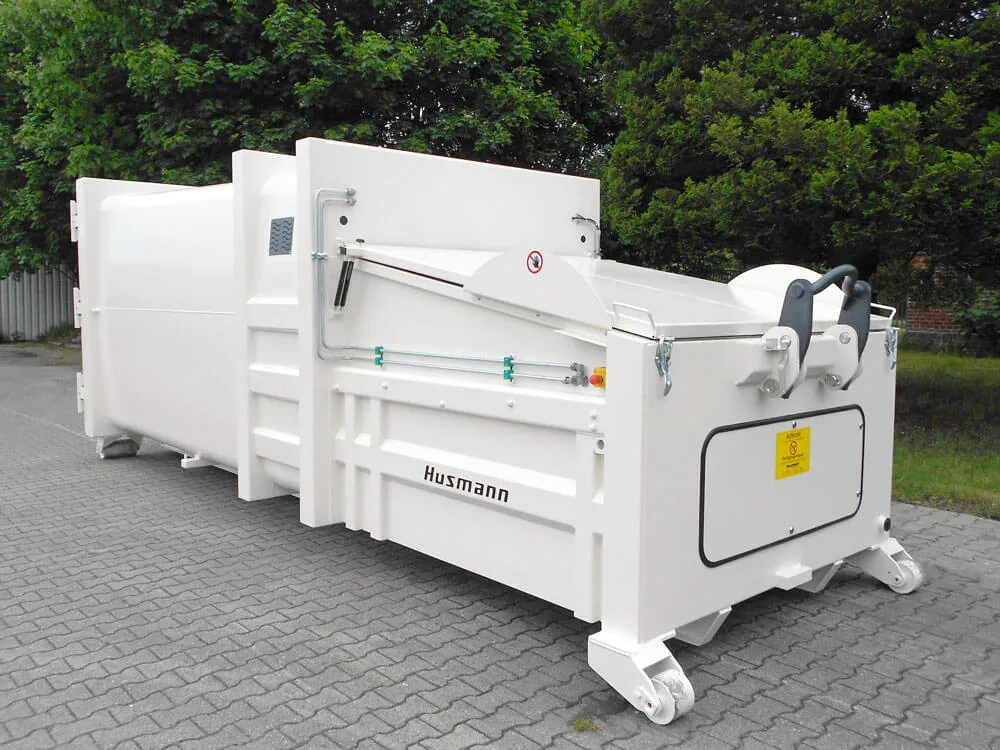
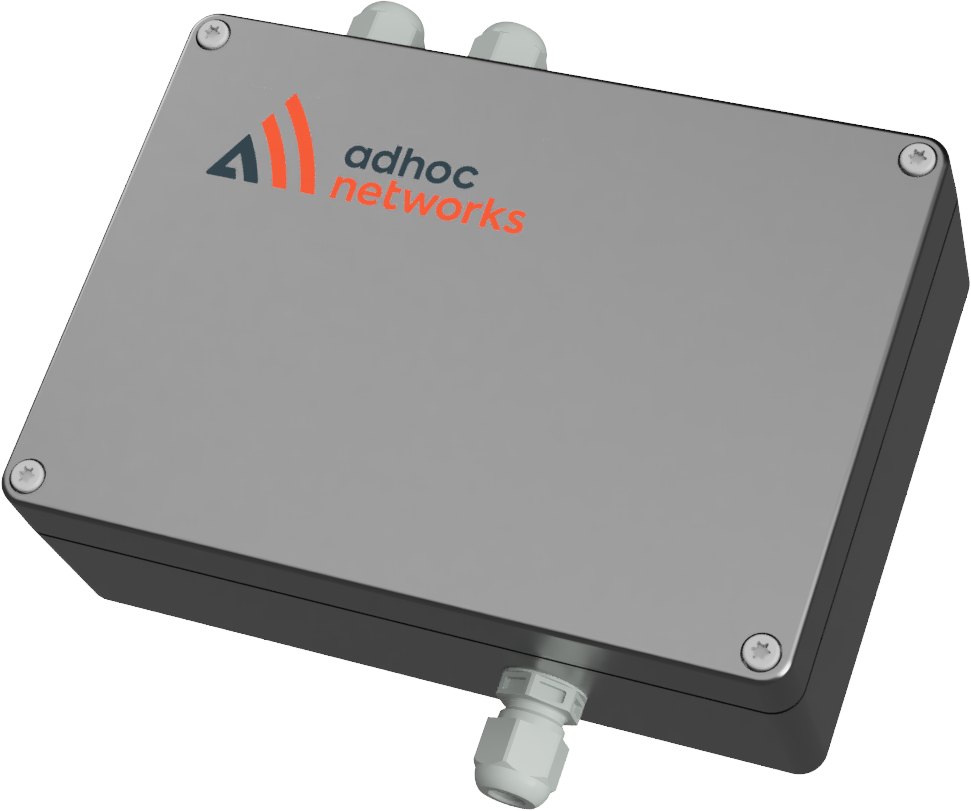
The Packman reporting system reads the press signals – fill level, emergency stop, faults, power – and reports them with the GPS position straight to dispatch. Retrofits to any make.
Five cost traps with rented compactors
Needless service calls
The customer reports the press is not running. On site it turns out the emergency stop is pressed, the power is off or the phase rotation is wrong – a call-out that could have been avoided.
Last-minute pickups
Friday, 3:30 pm: the press is full and has to be swapped before the weekend. The drivers have already gone home.
Where is that press, anyway?
The safety inspection is overdue, but the press cannot be found – or it has been stolen.
Customers annoyed by faults
When the press stops, the customer’s operation stalls. They notice before you do – and may bill you for the trouble.
Long idle times, no overview
Compactors are expensive investments. One that has barely moved in 76 days earns next to nothing – and only stands out when someone goes looking.
What dispatch sees
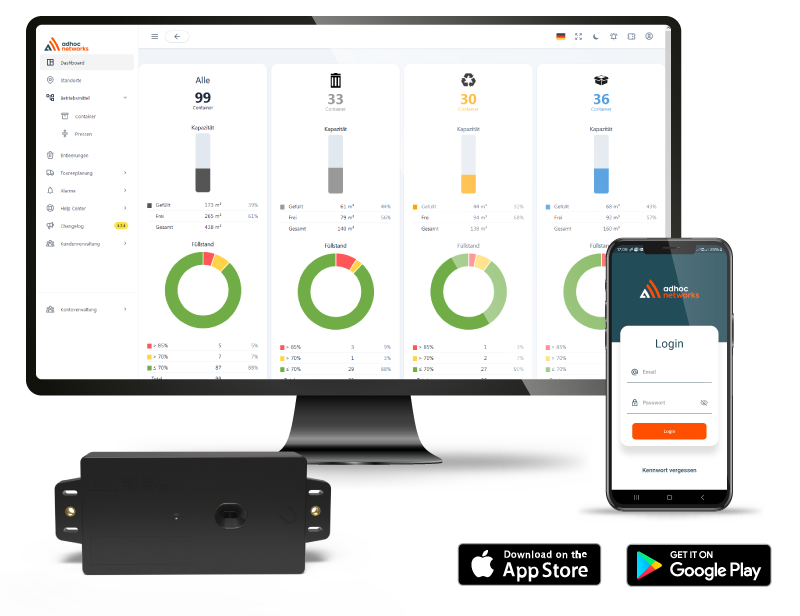
Fill level above 75 %, an emergency stop at a customer: the message appears in the list and on the map at once – before the customer calls. One click on the press shows the customer site, status, history and pictures.
What the Packman reports
Fill level
The press’s pre-full and full signals (75 % and 100 %), with a forecast for the pickup.
Emergency stop and faults
Emergency stop, general fault and phase sequence errors – know what is wrong before anyone drives out.
Power and free inputs
Whether the press has power – plus up to five signals you assign freely.
GPS and geofence
Position live on the map; geofences assign the press and its messages to the customer automatically. The idle time per press shows which ones barely earn.
Battery
Charges from the press and keeps reporting when it is unplugged – on the move as well.
Any make
Retrofits to any standard compactor, in 230 V and 24 V versions. Developed and made in Germany.
In use on compactors
Karl Meyer Umweltdienste
125compactors
Nehlsen
40compactors
Betriebsamt Norderstedt
Norderstedt25compactors

5 cost traps when renting out compactors – and how to avoid them
Needless service calls, last-minute pickups, unknown locations, customers annoyed by faults and long idle times: where rented compactors lose money and how a reporting system prevents it.
The building blocks for this use case
Frequently asked questions
Does the Packman fit every compactor?
Yes. The Packman works with any make and retrofits to any standard compactor – in a 230 V or 24 V version, connected with a pre-assembled, colour-coded cable.
What happens when the press has no power?
The built-in battery keeps the Packman running. It reports the missing power and stays locatable on the move.
Which signals can the Packman read?
Up to five press signals, such as pre-full and full, emergency stop, faults and power. The inputs can be assigned freely.
Do we need our own IT for this?
No. The platform runs in the cloud without touching your IT. Open interfaces pass the data on to other systems.
Can our customers see it too?
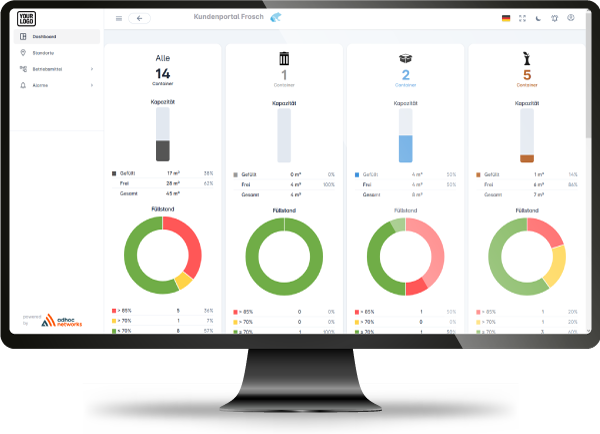
Yes. You can set up access for your customers. They then see the presses assigned to them with status messages. When a press reaches the fill-level threshold you set or reports a fault, the platform automatically sends a message by email, SMS or push – to you and, if you like, straight to the customer.
Your compactors – where should we start?
Tell us how many compactors you rent out or run – we will show you the platform live against your workflows.