
 DE
 EN
Empty collection pits before they overflow.
Black water, rainwater or other liquids: the radar sensor measures the level in the pit, the platform alerts you at the threshold you set – and the suction truck only goes where it is really needed.
Where collection pits get stuck
Overflow
When a pit overflows it gets expensive: cleaning, trouble with owners and, at worst, environmental damage.
Suction truck to a half-full pit
The suction truck is the most expensive vehicle in the fleet – and runs by calendar, not by need.
Lifting the lid to check
You can only see how full a pit is on site. Inspection trips cost time without anything being emptied.
Knowledge in people’s heads
Which pit fills up when is often known only to experienced drivers. On holiday or with new staff it is missing.
From level to tour
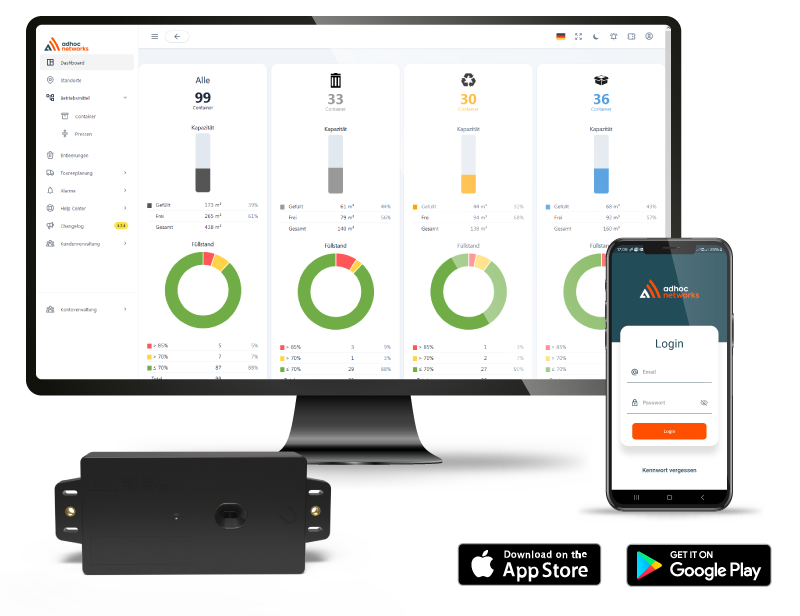
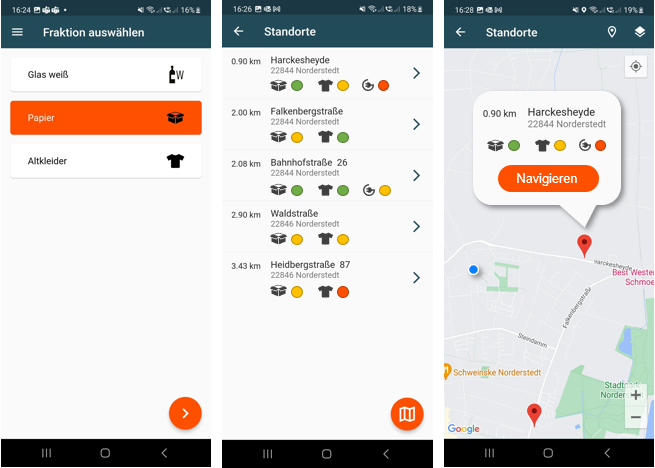
Levels of every pit on the dashboard and the map, a forecast of each pit’s due date – and the suction truck’s tour is planned by fill level. That saves trips, time and CO₂ and makes the work independent of who is driving.
How the pit is measured
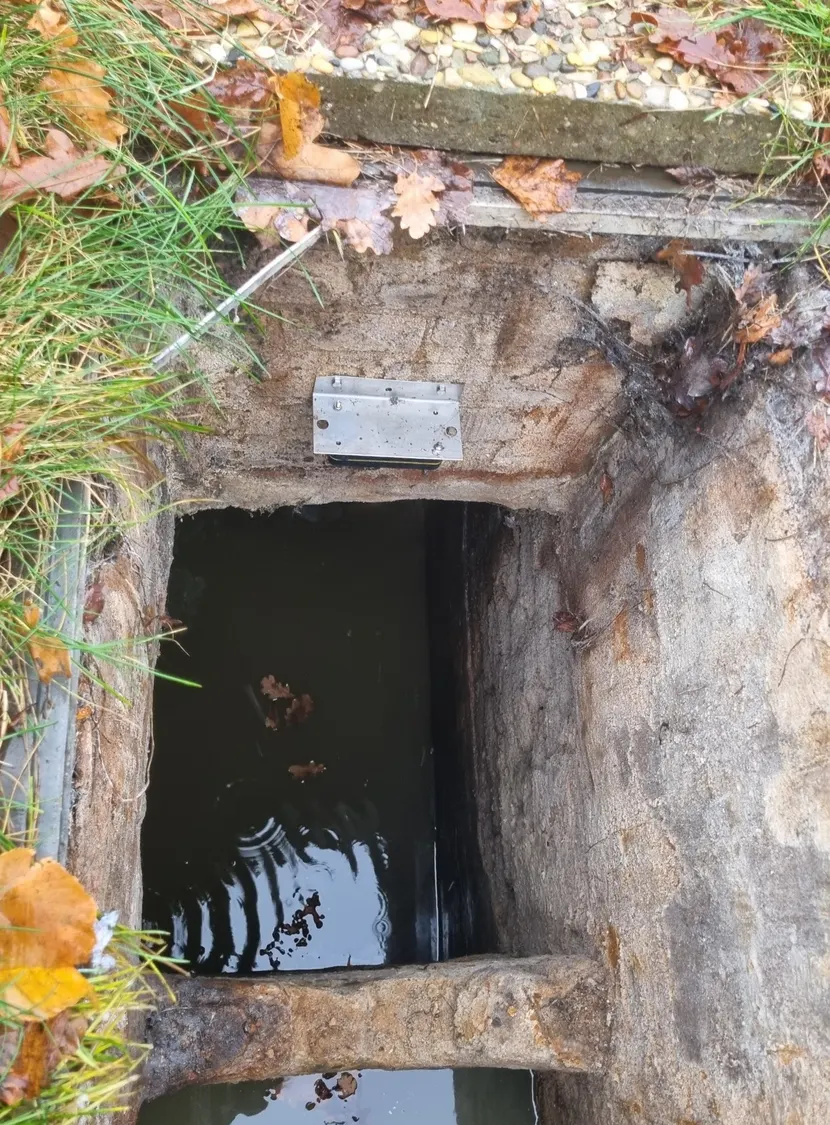
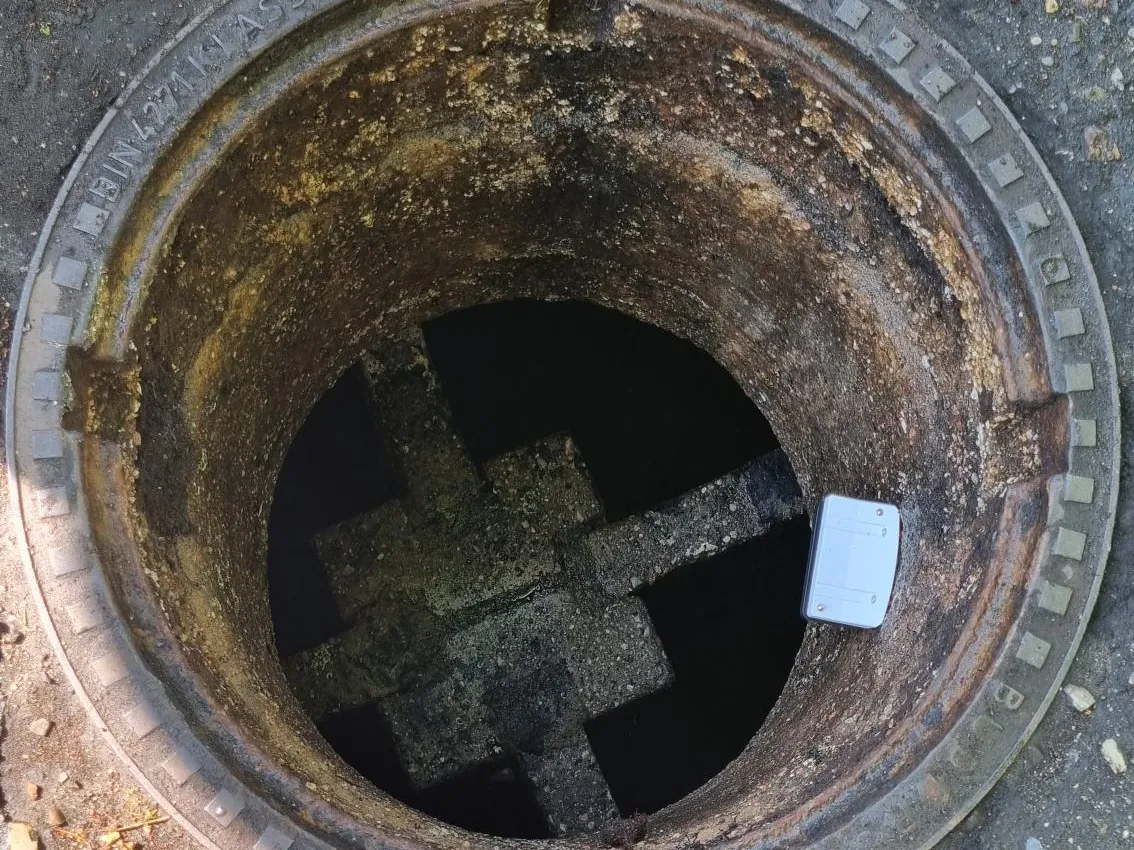
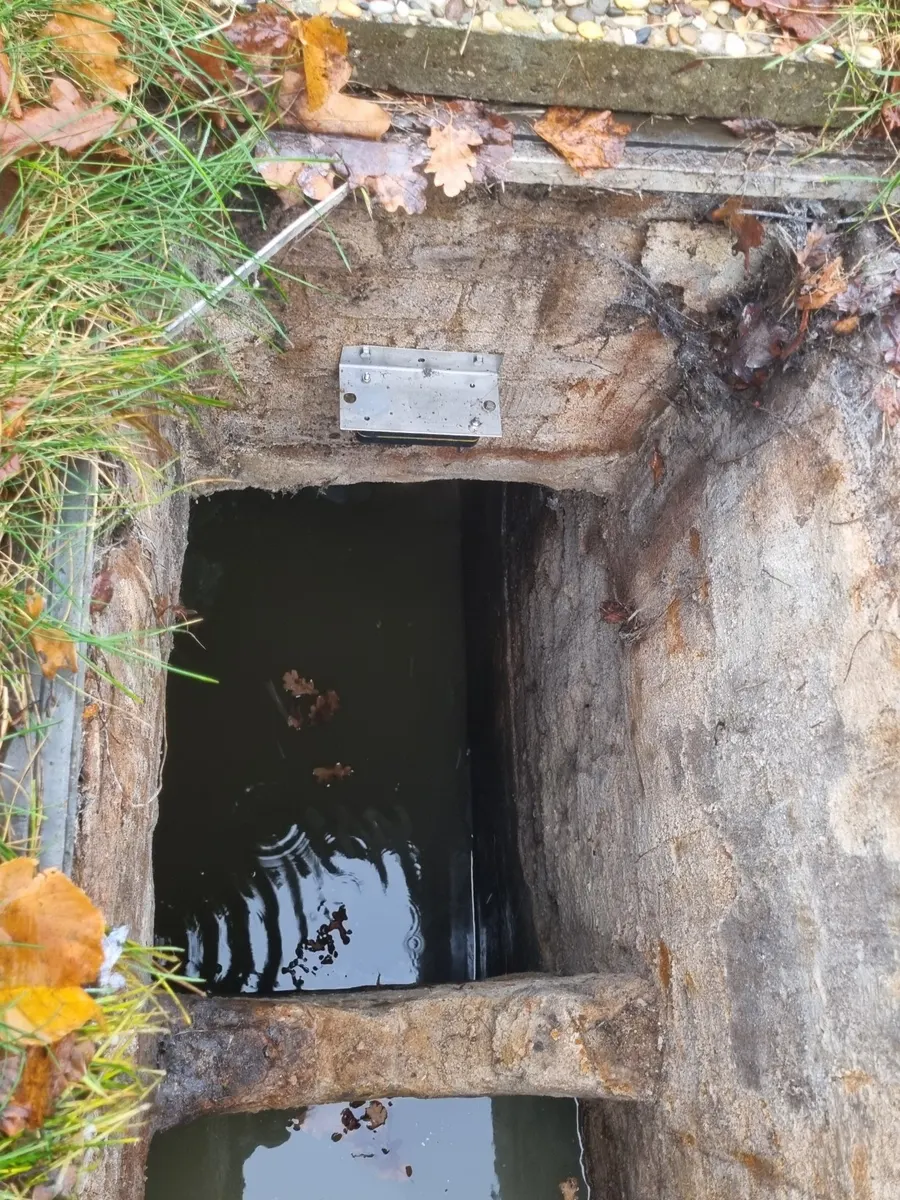
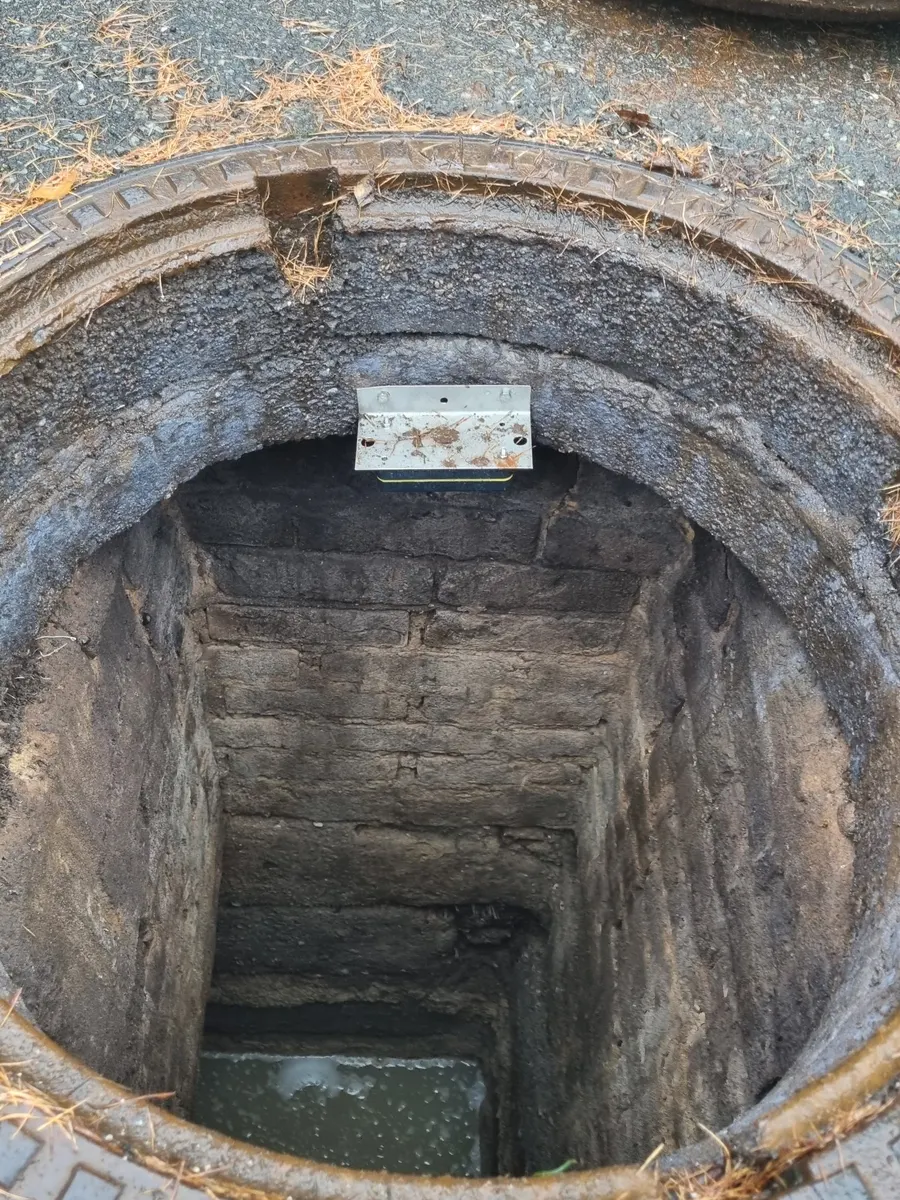
The sensor sits under the lid on a V4A stainless steel bracket and measures straight down onto the liquid by radar – in rectangular pits, round manholes and multi-chamber pits.
Rectangular pit
Bracket on the wall right below the cover; the sensor looks down onto the water surface.
Round manhole
Bracket below the manhole frame – the cover opens and closes as usual.
Multi-chamber pit
Sensor above the chamber that is emptied. Beams and walls do not disturb the reading.
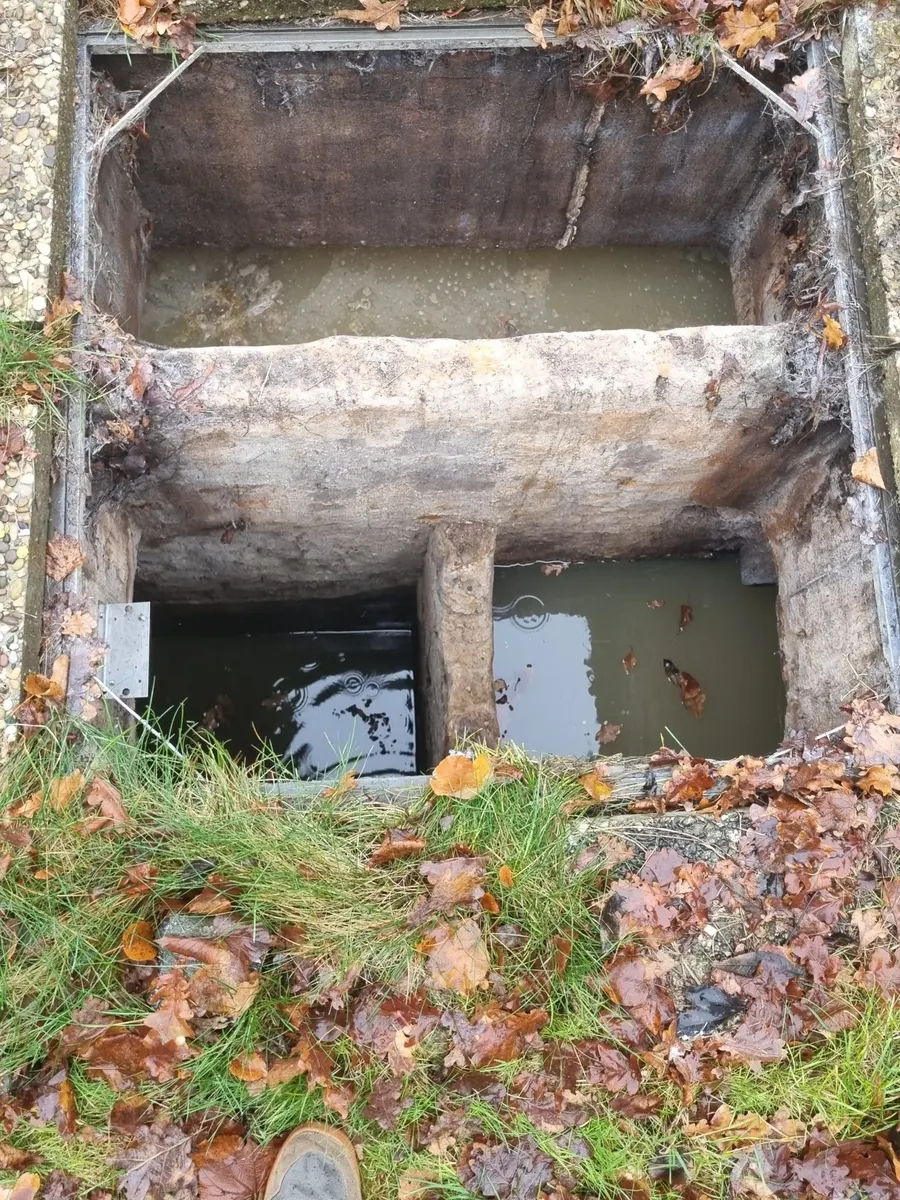
Built for liquids
Radar for the level
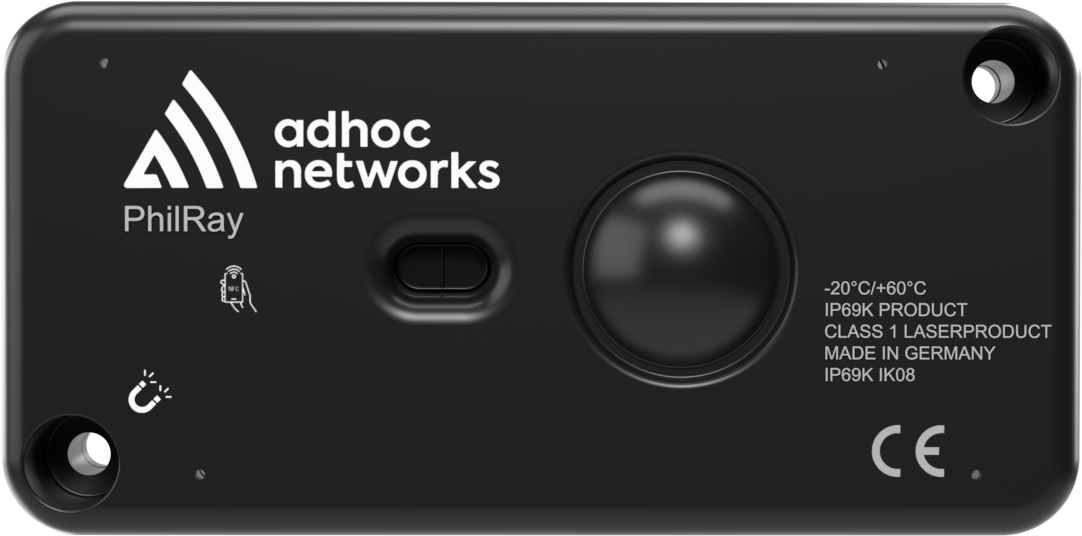
Radar reliably detects the surface of a liquid – even with vapour, foam or dirt on the walls. Temperature is recorded as well.
Interfering contours are no problem
Ladders, pipes and beams usually do not interfere, because the liquid level is clearly detected. If a fixture does cause a reflection, you mask it out in the platform.
IP69K
Sealed against submersion and high-pressure cleaning. If a pit does fill up, the sensor keeps measuring.
V4A accessories
Brackets and screws in V4A stainless steel – important with black water, where ordinary steel corrodes quickly.
No cable
Battery powered, data over the mobile network. No cable needs to be laid.
Alarm at a threshold
Freely configurable thresholds, messages by email, SMS or push. Every alarm is logged.
Everything about the pit in one place
Sites in digital form
Every pit with location, volume, photos and notes – in the browser and the app.
Documenting inspections
Recurring inspections and collections are recorded in a traceable way.
Import and export
Take over inventories from your existing systems and hand data back.
In use at collection pits
Betriebsamt Norderstedt
Norderstedt160collection pits
The building blocks for this use case
Frequently asked questions
Which liquids is the sensor suitable for?
For black water, grey water, rainwater and liquids in general. Radar detects the level regardless of what is in the pit.
Does it withstand black water?
Yes. The sensor is protected to IP69K, brackets and screws are V4A stainless steel. Even if a pit fills up completely, it keeps measuring.
What about ladders, pipes and partition walls?
Such interfering contours are usually no problem, because radar clearly detects the liquid surface. If a fixture does cause a disturbing reflection, it is masked out in the platform.
Are we notified when a pit is nearly full?
Yes. Thresholds are freely configurable; the platform sends a message by email, SMS or push and logs every alarm. If you like, it also goes to owners or customers.
Does a cable need to be laid?
No. The sensor runs on a battery and transmits over the mobile network. It is mounted under the cover with a bracket.
Your collection pits – where should we start?
Tell us the number of pits and what they collect – we will show you levels, alarms and tours live.