

 DE
 EN
Simplifying used-clothing logistics with digitalisation
April 15, 2025
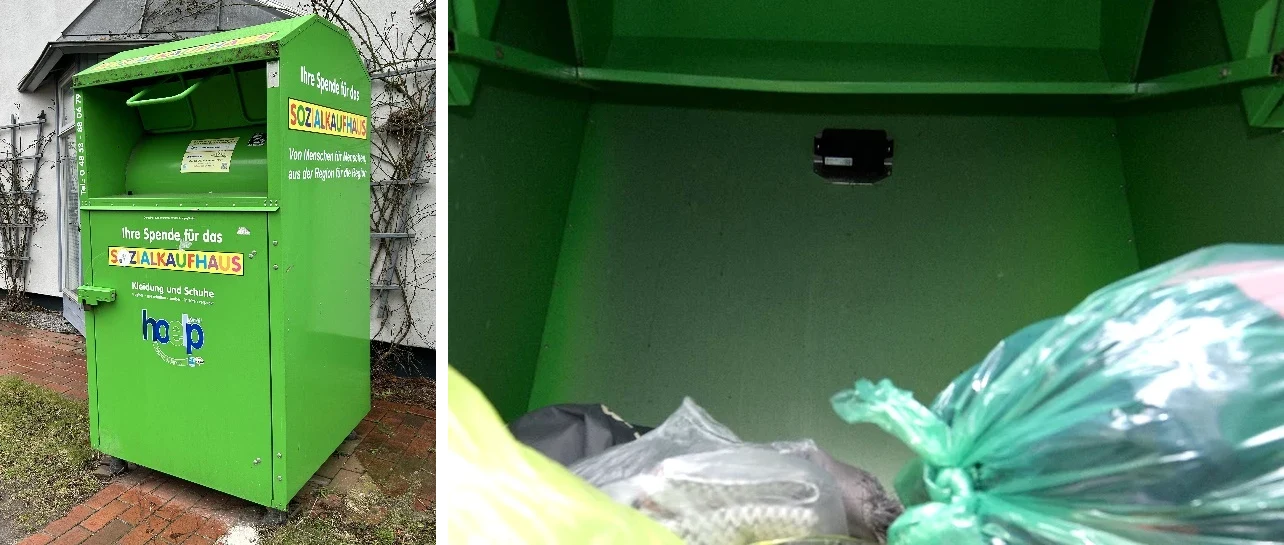
Digitalising collection processes in textile recycling can help cut costs in today's tight market. adhoc smart waste combines modern sensors with intelligent software to deliver real added value – especially in rural regions, where collection containers are often far apart.
This article was published in VKS News, issue 294 (waste logistics), the magazine of the VKU (German Association of Local Public Utilities).
Real-time monitoring and intelligent forecasting
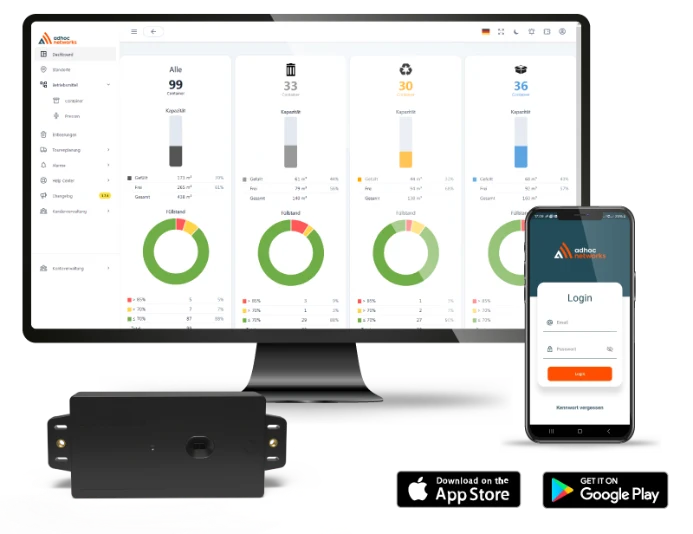
With fill-level sensors, textile collectors always know how full their containers are and how quickly they are filling up. Continuous monitoring not only shows early on when a container is full, it also delivers a precise emptying forecast: the system automatically works out when the next collection is due and how fill levels will develop over the coming days.
The software also detects anomalies in the fill-level curves that point to theft or blocked openings.
Plan collections and document them seamlessly
Besides fill-level monitoring, adhoc smart waste offers intelligent route planning. Collection routes are planned based on measured fill levels and optimised for the shortest distance.
Crews confirm each collection in the adhoc mobile app by scanning a QR code on the container. The current fill level is stored automatically. The system thus documents the time of every collection without gaps and calculates the amount of clothing collected.
Flexible solutions – even without sensors
The system can optimise collection even without active sensors: after scanning the QR code, crews can report the fill level manually. Because containers with and without sensors can be combined, there is a suitable, flexible solution for every collection scenario.
More applications for municipalities
The same approach works for litter bins or for tasks of municipal building yards. Locations are tagged with a QR code and stored in the platform, so crews can go there directly, complete the task and confirm it in the app – with complete documentation of the work done.
Case study: hoelp gGmbH in Meldorf
A successful example is hoelp gGmbH from Meldorf, which has already fitted its used-clothing containers with active sensors. The first goal is to document the quantities collected per site. The integrated route planning with optimised collection intervals will then help avoid unnecessary trips, reducing both costs and CO₂ emissions.
Did you know?
adhoc smart waste is also very popular for underground systems and depot containers. Besides demand-based route planning by fill level, the sensor automatically records collections and fill levels for containers emptied by crane trucks. This makes it possible to analyse collected quantities per site over long periods – providing, for example, a solid data basis for sizing such containers in sales.
Want to digitalise your collection logistics? Learn more about the features of adhoc smart waste and our sensors – or contact us directly.